פודקאסט "הקוריאנים"

ב-20 השנים האחרונות אני עוסק בבניית עסקים וסגירה של עסקאות עם קוריאנים עבור הלקוחות שלי בקבוצת Yonaco, הפועלת מסיאול ומתל-אביב.
לעסקים עם קוריאה צרו איתי קשר:


Episode 53: Penetrating the Korean Gaming Market
28.01.2026
South Korea is a global gaming powerhouse and a critical target market for any game studio aiming for global growth. However, with highly sophisticated users, unique regulations, and fierce competition, entering this market requires much more than just language translation. In this episode, Itzik Yona hosts Ryan Kim, Head of Online and Gaming at Yonaco […]
South Korea is a global gaming powerhouse and a critical target market for any game studio aiming for global growth. However, with highly sophisticated users, unique regulations, and fierce competition, entering this market requires much more than just language translation.
In this episode, Itzik Yona hosts Ryan Kim, Head of Online and Gaming at Yonaco Group. Ryan, who brings over 20 years of experience in the industry and previously served as the Country Manager for an Israeli company in Korea (Matomy), provides a unique perspective that bridges the gap between the Israeli/Western mindset and the Korean market reality.
Key Takeaways from this Episode:
- Why Korea? Understanding the market as a testbed for innovation and a gateway to Asia (Japan, Taiwan).
- The Barriers: Navigating regulatory risks (Loot boxes), cultural fit (beyond text), technical debt, and operational pressure.
- Success Essentials: The critical role of local partnerships, compliance, local payment gateways, and community support (CS).
- The 4-Phase Roadmap: A practical guide from Launch Prep (CBT), through Acquisition (UA), Retention, to Brand Building.
- The Numbers: Real-world benchmarks for CPI, ROAS targets, and the ideal media mix.
Podcast Notes
- 00:00 – Intro: Itzik Yona introduces Ryan Kim and the "Cracking the Korean Game Market" event.

- 01:42 – The Korean Opportunity: Why Israeli companies must target Korea (High ARPU, early adopters).
- 03:33 – User Profile: Understanding the Korean gamer – Mobile-First, performance-driven, and high churn rates.
- 06:45 – The 4 Main Barriers: Regulatory risks, Cultural fit, Technical debt, and Community pressure.

- 09:16 – Market Essentials: Partnerships, Compliance, Local Payments (Naver/Kakao Pay), and Support.
- 12:50 – Roadmap Phase 1: Launch Preparation, Pre-registration, and Closed Beta Testing (CBT).
- 14:12 – Roadmap Phase 2: Launch & User Acquisition – Balancing global platforms with local media.
- 15:10 – Roadmap Phase 3: Retention & Monetization – LiveOps strategies and competitive events.
- 15:58 – Roadmap Phase 4: Brand Building – Collaborating with local IP (Webtoons, K-Pop) and offline events (G-Star).
- 17:35 – Financials: CPI ranges, Day 7 ROAS goals, and diversifying the media mix.
- 19:09 – Summary & Call to Action: How Yonaco bridges the innovation-execution gap.
Full Episode Transcript
Itzik Yona (00:00):
Korea acts as an expansion hub. A success here dramatically boosts credibility across Asia and is your golden ticket to Japan, Taiwan, and Southeast countries.
The Koreans, Episode 53. This time, a lecture by Ryan Kim, Head of Online and Gaming at Yonaco Group, from the event "Cracking the Korean Game Market" hosted by Yonaco Group in collaboration with GameIS, the Israeli Game Industry Association. Dan asked the question: How can foreign and Israeli games be introduced into the Korean game market?
Ryan has over 20 years of experience in online and digital fields in Korea and even served as the CEO of an Israeli company in Korea. It is important to note that this time we are dealing with truly professional content intended for the gaming industry, and it is presented in English.
Why should Israeli companies make the effort to enter the Korean market? What challenges must they overcome on the way there? Why is game localization in Korea much more than just translation? What business models work in Korea? And who fits each of these business models? And finally, what is the recommended gradual roadmap for introducing a game to the Korean market, which is, of course, the fourth-largest gaming market in the world?
Ryan Kim (01:42):
Shalom and good morning everyone. I'm Ryan Kim, Head of Online and Gaming at Yonaco Group. It's great to be here with people who are building the next wave of tech and gaming innovation. I wish I can speak in Hebrew, but I'm not as good as Dan, so excuse me presenting this in English.
So today, I want to focus on one big question: How do we enter Korea, the world's most demanding and competitive high ARPU gaming market? And actually, how to be successful. I will share the Korean perspective openly, with cultural nuance and with a focus on practical and transparent insight.
But first, a little bit more about myself. I have over 20 years of experience in Korea's digital media and gaming ecosystems. And I have worked in several global companies. In fact, I have always felt a strong connection to Israel since I was the Korea's first Country Manager for Matomy. So I had the opportunity to visit Tel Aviv multiple times, and I really liked the culture there, especially the food and drinking culture. I loved it. So those experiences help me understand Israeli companies a little bit more from the inside. And after Matomy, I served as the Korea Country Manager at The Trade Desk, a US-based DSP company, and also a few others.
Ryan Kim (03:25):
So over the next 20 to 25 minutes, we will move quickly but thoroughly through four main segments.
Number one: Market landscape and strategic advantage. This is, I call, the "Why" and the "Wow".
Number two is the Reality Check: Entry barriers and core essentials to penetrate the Korea market.
Number three, I like to call it "The Engine Room": Our four-phase performance marketing roadmap to go to Korea market.
And number four is the Partnership: With benchmarks, budget, and how we can collaborate.
I promise to keep the jargon minimum and insight practical. And if you hear me start speaking in highly formal Korean business language, that's my cue to remind myself to relax, slow down, and bring it back to reality.
Ryan Kim (04:24):
So, let's look at the battlefield. Dan went over details, but again, Korea is the fourth largest global gaming market with a massive bias toward mobile. It's a mobile-first ecosystem, and it's deeply performance-driven. Every decision is scrutinized based on ROAS and CPI. The difference from the West? Users here are fast adopters, high spenders, and critically, high-volume churners.
Okay, you must master the channel mix, such as global platforms like Google, Meta, TikTok for acquisition volume. But more importantly, local media such as Naver and Kakao are absolutely critical for targeting those premium and high-value users. So think of Naver and Kakao as your VIP section, and global platforms as your main floor. And of course, we need both.
Ryan Kim (05:31):
Why should an Israeli company known for fast-paced innovation target Korea specifically?
First, it offers the ideal test market. Korean users are sophisticated and stress-test your product like no other else. They give you a fast feedback loop, providing rapid behavioral signals for immediate optimization, which is critical for live service monetization.
And second, Korea acts as an expansion hub. A success here dramatically boosts credibility across Asia and is your golden ticket to Japan, Taiwan, and Southeast countries.
And finally, the advanced digital ecosystem supports precision targeting and attribution, which suits your data-driven marketing DNA perfectly. So I also have experience at Matomy that I started Korea market but used that success case to open the Japan office at that time.
Ryan Kim (06:45):
But, there are inevitable barriers. So these are the walls that we must climb. And there are four main challenges. I know Dan went over this a lot so I will just touch base quickly.
First is regulatory risk. This is serious. Strict compliance is required on ratings, consumer protection, and those infamous Loot Box rules. But many people kind of neglect this risk. They wanna do launch as fast as they can, but once you violate any regulation, it's really hard to go back to the game again. So almost, I would say it's impossible. So you have to be very careful at first.
Number two is cultural fit. This is a big one. It requires deep localization. Not just translation. For example, a color palette that works in the West might signify bad luck here. And common global UI/UX might violate established Korean user flow expectations. So, I will just give you a recent example of a casual game of an Israeli company. I mean, it's a casual game, but the characters I saw, it's not so much casual to me. So I think once we launch the game, I would suggest changing the characters, but some of those are not applicable to Korean users.
Ryan Kim (08:21):
And number three is technical debt. The flawless device compatibility and network optimization are mandatory. Users will not tolerate lag or crashes. They will just leave and never look back because there are other games available out there.
So number four is operational load and community pressure. Success requires demanding continuous LiveOps and high content dependency. Furthermore, Korean users' communities are uniquely powerful. So a single negative review wave in a place like Naver Cafe can derail a multi-million dollar launch. So early community management must be handled with surgical precision.
Ryan Kim (09:16):
So, how do we unlock this market? I give you four non-negotiable essentials.
First one is Partnership. Secure an experienced local publisher or mobile operators, like SK Telecom or KT. And we see there are three viable models.
First one is Full Publishing. So it requires high initial investment but also maximum local expertise and resource commitment. This is best for massive IP launches.
And second model is Hybrid. So retain control of UA for performance marketing while local partner manage LiveOps, CS, and compliance. So this is often the best balance for high-growth tech companies, maintaining your data control.
And third model we suggest is Strategic Model. This is focused only on a specific service, like compliance, payment, or specialized media buying, and also marketing as well. So we typically recommend to start with a Strategic Model as the sweet spot for maximizing control and localized execution.
Ryan Kim (10:37):
And second entry essential is Compliance. Prepare all age rating and legal documents early. You have to know the local gaming law, which I often hear that is very different than other countries, especially compared to Western markets. The Loot Box rules that Dan mentioned are especially sensitive, and transparency is non-negotiable. Self-regulation is quickly moving toward government enforcement, so being ahead of the curve and documenting your odds disclosure is very critical.
Number three is Payment. Well, I think this is not a must at first, but very important for high ARPU. Korea is a mobile-first nation, and trust is tied to domestic services. So integrating essential local gateways, especially Naver Pay and Kakao Pay, for frictionless monetization and improved conversion. Relying on only Google and Apple Store billing is like accepting only foreign cash. You will leave money on the table otherwise. So local payment methods are often faster and heavily favored by high spenders, so you have to consider this.
Ryan Kim (12:09):
Number four is Support. Establish official local CS and community channels. I mentioned Naver Cafe, and then something like Discord, are where the community lives and breathes. Your CS responses must be fast, polite, and culturally aware. Remember, community sentiment moves faster than your update cycle. A dedicated, responsive local team is your first line of defense against negative public relationships.
Ryan Kim (12:50):
So now I will talk about the four-phase roadmap. Keep in mind that this four-phase journey is the best practice for actually relatively big companies that have decided on full-scale attack on Korea. But for those of you who still need to test the water, we know how to start with low budgets and low profile, so don't worry about it. We will, we can scale with you. So our goal is to make your initial investment smart, not just big.
On Phase 1: Launch Preparation. So this is the runway. It gives months before global release. So we focusing on pre-registration using high-incentive campaigns. We execute a localized soft launch for technical and monetization testing. But critically, we run an intense Closed Beta Test (CBT) with Korean users. So the CBT is not just for finding bugs. It's for testing your monetization curve, balancing, and content consumption speed before the official launch. So select your influencers and media partners here for authentic early access content.
Ryan Kim (14:12):
Phase 2 is Launch and Acquisition. Time to ignite the engine, I would say. This is where your performance marketing prowess meets the Korean ecosystem. We scale UA utilizing local media plus global platforms for volume. We target high-intent and premium users via such as Naver Search and Kakao Ads.
For example, creative tips: For Naver, use clear, information-rich creatives. But for TikTok, use fast-paced, personality-driven, reactable content to drive viral reach.
And finally, implant robust App Store Optimization (also called ASO) with perfectly localized Korean keywords. We monitor ASO ranking daily.
Ryan Kim (15:10):
Next, Phase 3 is Retention and Monetization. So this is the critical phase where we look into the high ARPU. We run segmented LiveOps tailored for all player tiers. Korean users love competitive leaderboards, limited-time collaboration events, and complex login bonuses. So we programmatically target lapsed users with retargeting solutions. Finally, maintain engagement through continuous streamer/influencer collaboration and in-game events. We manage this partnership ensuring they drive specific in-game behaviors.
Ryan Kim (15:58):
And last phase, Number 4, is Brand Building. Going mainstream. For true long-term dominance, you need cultural resonance. We achieve this through strategic IP collaboration. Partnerships with major K-Pop, Webtoon, or TV IPs that are currently very popular. So this is how you transition from being a foreign game to being a cultural event. We secure visibility via PR and mainstream media coverage, moving beyond just the gaming press. And we build an offline presence with strategic activation at G-Star or major K-culture offline events.
So we have today Mr. Ido Brosh from GameIS. And just like GameIS in Israel, Korea has a similar organization called Korea Game Industry Organization. And we, Yonaco, has close relationship with them. And G-Star actually ended last month in November, but for upcoming years, we can have some special event like such as Israeli booth or event hall from next year. So when the registration time approach, which I believe is early next year, we will also share that with you.
Ryan Kim (17:35):
So I think this might be more interesting, so let's ground this in numbers.
For CPI, expect ranges from only 15 cents to $4. I know it seems big difference, but especially… I'll give you example again in casual game. It is important to boost the ranking in the store because, I think other country might not different that much, but in Korea, users download casual game… they just see on the ranking. Not about the game company name or game name itself. So they just try from the one number 1 to number 5 and find what they like. So when you boost those ranking, CPI is tentatively low. But of course when you wanna convert to the loyal user, the CPI go up to $4.
And our ROAS goal for well-performing title is to aim for Day 7 ROAS of 50%. But of course again, I have experience of 100% ROAS within 14 days. So it really depends on how much you want to put in and what's your KPI. And this can improve with tight monitoring.
And your media mix need a balanced structure across local majors, local media, and performance channels. So don't just over-rely on one channel. Diversification is risk mitigation.
Ryan Kim (19:09):
So, I think we covered a lot of ground today. We know the Korean market isn't just about launching a great game. It's about navigating the intense, scrutinized market of regulatory compliance, mastering deep culture localization, and executing a four-phase performance roadmap with surgical precision. From secure Day 1 installs via high-value pre-registration to building long-term brand equity through IP collaboration.
So the gap between your innovative world-class game and the highly demanding, hyper-competitive Korea user base is where the challenge lies. So to bridge that gap and to transform that challenge into reliable high ARPU revenue, you don't just need advice. You need a local execution engine.
So why partner with us? We bridge the gap between your innovation and Korean execution. We offer 20 years experience in Korea mobile gaming market, and we provide full-stack execution covering media, creative localization, offline event, and CS.
Itzik Yona (22:58):
That was Ryan Kim speaking at the event "Cracking the Korean Gaming Market" held in collaboration with GameIS. You are invited to add "The Koreans" with Itzik Yona to your podcast app. All podcasts and hundreds of articles about people and businesses in Korea are concentrated on "The Koreans" blog. You can also sign up for the Korea Monthly on the Yonaco Group website and receive the newsletter and the podcast to your email, or join the quiet WhatsApp group of the newsletter. I am available for you for anything complicated related to Korea. My email is [email protected] or via "The Koreans" WhatsApp at 050-894-4823. You are welcome to get in touch. We were Ryan Kim and Itzik Yona, and this was Episode 53 of "The Koreans" podcast. Shalom, thank you, and have a good week.




פרק 52: Unlocking the Korean Gaming Market
South Korea is a global gaming powerhouse and a critical target market for any game studio aiming for global growth. However, with highly sophisticated users, unique regulations, and fierce competition, entering this market requires much more than just language translation. In this episode, Itzik Yona hosts Ryan Kim, Head of Online and Gaming at Yonaco […]
 45:00 דקות
פרק 54: שגריר משמיים וצוללות ב-43 מליארד
South Korea is a global gaming powerhouse and a critical target market for any game studio aiming for global growth. However, with highly sophisticated users, unique regulations, and fierce competition, entering this market requires much more than just language translation. In this episode, Itzik Yona hosts Ryan Kim, Head of Online and Gaming at Yonaco […]
45:00 דקות
יענין אותך גם
למה קוריאה?
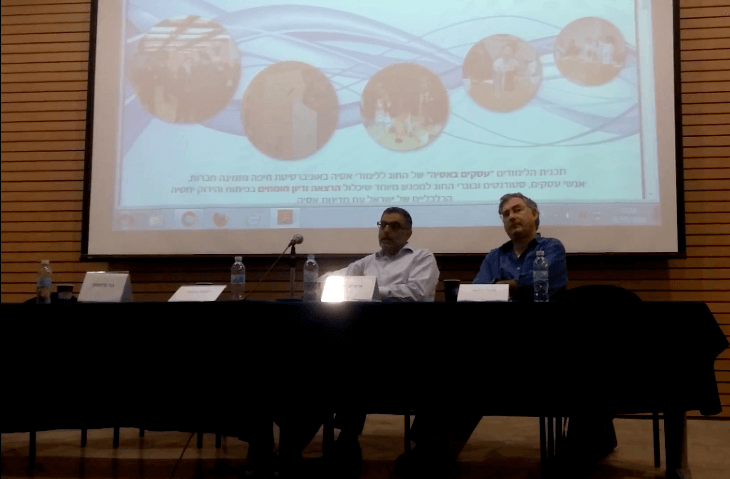
פעמים שאני נדרש להסביר מה כל-כך מיוחד בקוריאה עבור כלכלת ישראל. שכן קוריאה היא כלכלה מפותחת ואולי עדיף לנו להתרכז בלמכור את מרכולתינו בתחומי הטכנולוגיה והחקלאות למדינות שצריכות את זה – כמו סין והודו. השבוע נשאלתי בענין זה במפגש בנושא "פיתוח הקשרים הכלכליים אסיה-ישראל", שערכה התכנית ״עסקים באסיה״ של החוג ללימודי אסיה באוניברסיטת חיפה. להלן קטע […]
 איציק יונה

קוריאה – סיכום שנת 2015 במספרים
לרגל סיומה של שנת 2015 ערך Korea Herald סיכום של שנת 2015 ב קוריאה במספרים. קצר קולע ומעניין. להלן (כל הסכומים תורגמו מוון קוריאני לפי השער ביום 31 בדצמבר): אינטרנט ב קוריאה 10 מליון ממשתמשי אפליקציית המסרים KakaoTalk שולחים סמיילים בתשלום. 22 מליארד פריטים נקנו באינטרנט ב קוריאה במהלך השנה. 212 מיליון דולר שולמו דרך […]
איציק יונה
ירחון קוריאה ינו׳ 21 – מהדורת כיס
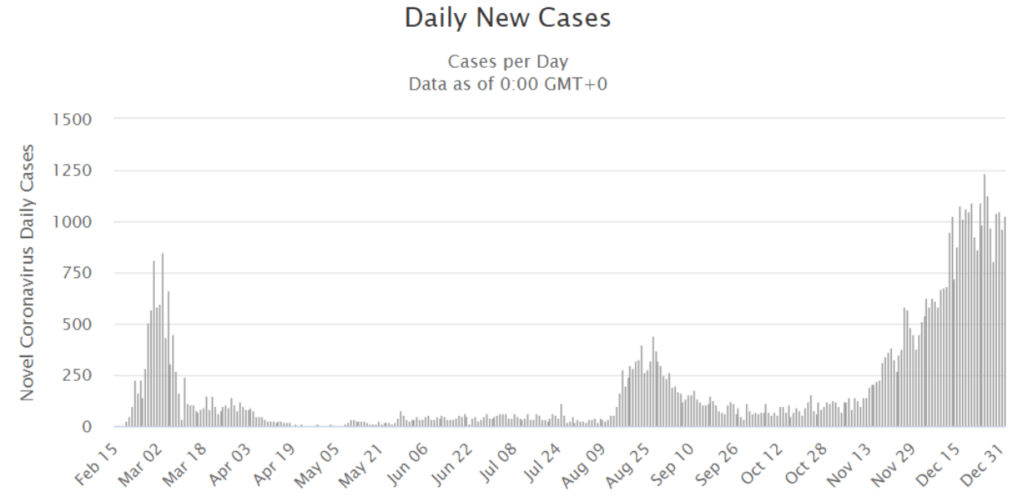
ירחון קוריאה לחודש דצמ׳ 20 בגרסת כיס. בלי סיפורים, בלי תמונות. לירחון בגרסה המלאה – פה. חדש! ירחון משודר איציק יונה משוחח על הנושאים בירחון. האזינו: גל שלישי קנגנאם סטייל עלייה בתחלואה בקוריאה שהחלה בתחילת נובמבר התעצמה במהלך דצמבר. מספר המאומתים היומי צמח לסביבות 1,000 בהחלט גל שלישי במונחים קוריאנים. מספר המתים הגיע בסוף דצמבר ל-940. במהלך הכי קרוב אי פעם […]
 ירחון קוריאה